History ·
The USS Indianapolis: A Final Mission and Naval Tragedy
After delivering the atomic bomb to Tinian, the heavy cruiser USS Indianapolis was torpedoed and sank in 12 minutes — leading to the deadliest sea disaster in U.S. Navy history and a decades-long fight to clear her captain's name.
By The Captain
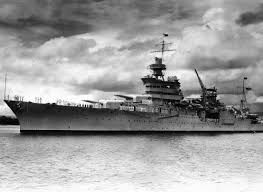
USS Indianapolis
The sinking of the USS Indianapolis (CA-35) remains one of the most harrowing and controversial tragedies in U.S. naval history. After delivering components of the atomic bomb to the Pacific island of Tinian in July 1945, the heavy cruiser was torpedoed by a Japanese submarine and sank in just 12 minutes, leaving nearly 900 sailors stranded in shark-infested waters. Over the course of four agonizing days, hundreds perished from exposure, dehydration, and shark attacks, making it the deadliest sea disaster in U.S. Navy history.
More than just a story of wartime tragedy, the tale of the Indianapolis involves a secret mission, a catastrophic failure in military communication, and a decades-long struggle for justice. This article explores the ship’s wartime service, the events leading up to her final voyage, the deadly aftermath, and the eventual exoneration of her captain, Charles B. McVay III. It’s a story of heroism, hardship, and redemption — one that continues to resonate more than 75 years later.
The Ship and Her Service
The USS Indianapolis (CA-35) was a Portland-class heavy cruiser that served with distinction throughout World War II. Commissioned in 1932, she had already earned ten battle stars for her Pacific service, participating in major engagements from the Aleutian Islands to Iwo Jima. By July 1945, the Indianapolis had proven herself as one of the Navy’s most reliable warships, serving as flagship for Admiral Raymond Spruance’s Fifth Fleet.
The Secret Mission
In July 1945, the Indianapolis received orders for what would become her final mission — one shrouded in absolute secrecy. The cruiser was tasked with delivering critical components of “Little Boy,” the atomic bomb destined for Hiroshima, from San Francisco to the U.S. naval base at Tinian in the Mariana Islands.
See: USS Indianapolis Brought the A-Bomb (navycrow.com)
On July 16, 1945, the Indianapolis departed San Francisco carrying the uranium-235 projectile and other essential components of the atomic weapon. The mission was so classified that even Captain Charles McVay III was not fully briefed on the cargo’s true nature. The ship made record time across the Pacific, covering the 5,000-mile journey to Tinian in just ten days.
After successfully delivering the atomic bomb components on July 26, the Indianapolis received new orders to proceed to Leyte in the Philippines to join Task Force 95, preparing for the planned invasion of Japan. This routine transit would prove anything but ordinary.
The Sinking
On July 30, 1945, at 12:14 AM, disaster struck. The Japanese submarine I-58, commanded by Lieutenant Commander Mochitsura Hashimoto, fired six torpedoes at the Indianapolis. Two found their mark, striking the starboard side of the cruiser.
See: SOS Indianapolis: Behind the Sinking of the Heavy Cruiser (HistoryNet)
The first torpedo hit near the bow, causing massive flooding and knocking out the ship’s electrical power. The second struck amidships, igniting aviation fuel and causing a catastrophic explosion. Within just 12 minutes, the USS Indianapolis rolled over and sank, taking approximately 300 of her 1,196 crew members down with her.
Survival in the Pacific
What followed was one of the most harrowing survival stories in naval history. Approximately 900 sailors made it into the water, but they faced an unimaginable ordeal. With few lifeboats and limited supplies, the survivors were left floating in the vast Pacific Ocean.
The men faced multiple threats:
- Exposure: Tropical sun during the day, cold at night
- Dehydration: Limited fresh water supplies
- Shark attacks: Tiger sharks and other species were drawn to the area
- Hypothermia: Despite warm surface temperatures, prolonged exposure took its toll
- Hallucinations: Dehydration and exhaustion led to dangerous delusions
Many sailors died from their injuries, drowning, or shark attacks during the first night. As days passed, dehydration and exposure claimed more lives. Some men, driven mad by thirst, drank seawater, which only hastened their deaths.
The Delayed Rescue
The Indianapolis was not scheduled to arrive at Leyte until July 31, and when she failed to appear, no immediate alarm was raised. The Navy assumed the ship had been delayed or diverted. This communication breakdown proved fatal — the survivors remained in the water for four days and five nights.
The rescue finally began on August 2, when Lieutenant Wilbur Gwinn, piloting a PV-1 Ventura on routine patrol, spotted an oil slick and survivors in the water. Gwinn immediately radioed for help and dropped life rafts and supplies to the men below.
The first rescue ship, the USS Cecil J. Doyle, arrived that evening, followed by other vessels. Of the approximately 900 men who initially survived the sinking, only 316 were pulled from the water alive.
The Aftermath and Controversy
The sinking of the Indianapolis became one of the most controversial incidents in U.S. naval history. Captain Charles McVay III was court-martialed in December 1945 — the only U.S. Navy captain to be court-martialed for losing his ship to enemy action during World War II.
The charges against McVay included:
- Failure to zigzag (an evasive maneuver)
- Hazarding his ship by failing to abandon ship in a timely manner
The court-martial was highly controversial. Many argued that McVay was made a scapegoat for systemic failures in naval communication and intelligence. Notably, the Japanese submarine commander Hashimoto testified that zigzagging would not have prevented the attack, as he had achieved a perfect firing position.
McVay was convicted of hazarding his ship but acquitted of failing to zigzag. He was sentenced to lose 100 numbers in his permanent promotion list, though Fleet Admiral Chester Nimitz later restored his rank.
The Human Cost
The tragedy haunted the survivors for decades. Many suffered from what we now recognize as post-traumatic stress disorder. Captain McVay, despite being exonerated by many of his crew and naval historians, faced years of hate mail from families of the deceased. Tragically, he took his own life in 1968.
See also: Butler’s USS Indianapolis Photo Gallery (pbase.com)
The survivors formed a strong bond, meeting regularly to honor their fallen shipmates. They campaigned tirelessly to clear Captain McVay’s name, arguing that he had been unfairly blamed for circumstances beyond his control.
Vindication and Legacy
In 2000, Congress passed a resolution exonerating Captain McVay, stating that the court-martial was a miscarriage of justice. The resolution was signed into law by President Bill Clinton, finally clearing McVay’s name 55 years after the tragedy.
The USS Indianapolis disaster led to significant changes in naval procedures:
- Improved communication protocols for ship movements
- Better survival equipment and training
- Enhanced search and rescue procedures
- Stricter requirements for reporting overdue vessels
Remembering the Indianapolis
Today, the USS Indianapolis is remembered not just for her tragic end, but for her crucial role in ending World War II. The atomic bomb components she delivered to Tinian were assembled into “Little Boy,” which was dropped on Hiroshima on August 6, 1945, just days after the ship’s sinking.
The wreck of the Indianapolis was finally located in August 2017 by a team led by Microsoft co-founder Paul Allen, resting at a depth of over 18,000 feet in the Philippine Sea. The discovery provided closure for many families and renewed interest in the ship’s story.
Conclusion
The story of the USS Indianapolis serves as a powerful reminder of the sacrifices made during World War II and the importance of learning from tragedy. The ship’s final mission helped bring about the end of the war, but at a terrible cost. The courage of her crew — both those who died and those who survived the ordeal in the Pacific — stands as a testament to the human spirit’s ability to endure even in the face of unimaginable hardship.
The USS Indianapolis Memorial in Indianapolis, Indiana, stands as a permanent tribute to the ship and her crew, ensuring that their story and sacrifice will never be forgotten.
The Indianapolis tragedy also highlights the importance of accountability, communication, and the need to support those who serve. The long fight to clear Captain McVay’s name demonstrates that sometimes justice, though delayed, can still be achieved. Today, the memory of the USS Indianapolis and her crew continues to honor all those who have made the ultimate sacrifice in service to their country.
Today, the name lives on in the USS Indianapolis, a Virginia Class Submarine.
Originally published at the live site .