
History ·
Key Decisions That Led America into Vietnam
Two bookends pressed America into Vietnam: the post-WWII decision to bankroll the French in Indochina, and the Gulf of Tonkin Resolution that handed LBJ a blank check.
By The Captain
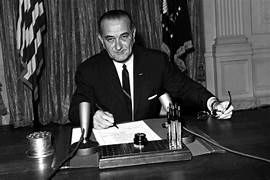
Greetings fellow travelers! This week, I am going to tackle the question, “Identify at least two key decisions made by the U.S. that entangled the Americans in the war and reflect upon the impact of these decisions.” There were many decisions that led to American involvement in the war, but I think the two big ones were the decision to support the French in their efforts from 1945–1954 and the Gulf of Tonkin Resolution. These two decisions were the bookends that pressed America into the war.
The end of the Second World War ushered in a fear of Communist expansion that Stalin reinforced with his actions in Europe. This brought on the Cold War that had hot spots that flared around the world. Since the French were fighting Ho Chi Minh and the Viet Minh, who were professed communists, the American leadership chose to support our ally against the communists in Indochina. Aid to France was mostly financial, but there were military assistance plans on the table to support if necessary. Once the French lost and exited Indochina, America assumed the role in Vietnam since Communism still needed to be stopped and they were in position to support the South against the communist North.
The other bookend was the Gulf of Tonkin Resolution. This was a congressional resolution that allowed the Johnson Administration the ability to escalate forces as necessary to defeat the communists in the North. Johnson was able to use the Gulf of Tonkin incident where Naval vessels were allegedly attacked by North Vietnamese vessels in the Tonkin Gulf. This sparked the anger of the American people which led Congress to pass the resolution. It was the catalyst that finalized the inevitable escalation in Vietnam.
Both events had a major impact on America becoming embroiled in the mess of Vietnam. The financial and military support of France was built into the Cold War strategy of “stopping communism.” By being tied into the French actions there, American prestige and credibility was put on the line, which led to the decision to take over the war in Vietnam. The fear was that had they not, American standing in the world as an anticommunist stalwart would be irreparably damaged. The Gulf of Tonkin Resolution removed all important checks on the executive branch of government. This lack of Congressional involvement led to the string of disastrous decisions that led to the American experience in Vietnam.
America’s involvement was a mix of bad decisions, miscalculation of the enemy, and Cold War ideology. By supporting the French as part of a global struggle against communists, the U.S. set the stage to be unable to easily disentangle from the conflict. The Gulf of Tonkin exacerbated it as it allowed the Executive branch of the American government free reign to apply military solutions to problems that could have and should have been solved by other means. These decisions led to the loss of more than 58,000 Americans and huge expenditures of national treasure that still led to America leaving anyway without a win — thus realizing the damage to prestige on the world stage they wanted to avoid.
Originally published at the live site .