
History ·
How French Failures in Vietnam Foretold the U.S. Struggles
The French had ninety-six years to learn lessons in Indochina — and lost anyway. Every misread that broke them at Dien Bien Phu, the U.S. would repeat a decade later.
By The Captain
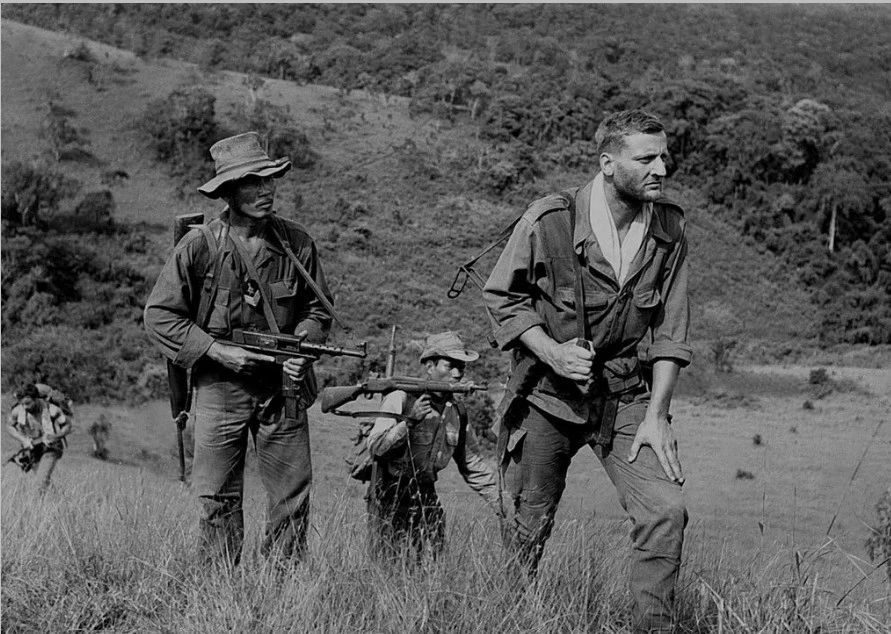
As I study Vietnam, I was pondering the question, “Was there anything about the French involvement in Vietnam that may have given the U.S. some insight into what they could expect?” My simple answer is, yes there was plenty, but in the effort to satisfy the process, let’s look at it shall we?
Facts
The French had their colony in Indochina for ninety-six years, in which time they had plenty of time to learn lessons themselves, let alone what American leaders could have chosen from. After the French regained control after the Second World War, they experienced an uprising from the Vietminh which would have a direct correlation to the American chapter in Vietnam.
The French tried to fight an insurgency with regular big army tactics. It didn’t work. Viet Minh hit and run tactics strangled supply lines, created confusion and fear amongst the French Army, and were driven by a strong ideology and desire to be independent from the French. Had the French taken the time to get to know their enemy, they would have learned that they had been fighting for their independence for a thousand years. The French were foreigners in what they perceived as an alien land, far from home, and depended on a long supply line. The Viet Minh on the other hand were fighting in their country where they were experts on the terrain and could rely on local support from the population.
The French also underestimated and ignored the Vietnamese commitment to independence, nationalism, and the ideology behind their resistance. This was far from a colonial rebellion; it was a struggle for autonomy against foreign oppression and their own national identity. From the book on page 43 it is said that:
“The French encountered not just a military resistance, but a deeply rooted nationalist movement that viewed foreign rule as an existential threat to the very identity of Vietnam. This nationalism would prove to be a force no colonial power could easily subdue.”
The U.S. idea of stopping Communism also failed to recognize this strong desire for national identity and autonomy. It’s pretty difficult to win hearts and minds if you don’t understand the people who you are trying to win over.
Along the lines of not understanding the country and its people, the French relied on the Bao Dai government, who was viewed by those he was supposed to lead as a puppet for the French. There was no respect for him amongst the people. The same went for the Americans’ time as they relied on the corrupt South Vietnamese government. In every case, the Vietnamese leaders were out of touch with their people and were only interested in their own power and standing.
Both the French and Americans learned the hard way about the cost and unsustainability of fighting this kind of war. Both wars were long, drawn out, and costly in men, materiel, and political capital. Both nations lost support of the people at home and this caused both nations to leave in defeat. Both countries faced severe anti-war sentiment and discontent from their home fronts. As stated from the book on page 45:
“As the war dragged on, the French found themselves mired in a conflict that drained resources, morale, and political capital at home. Ultimately, it was not just military defeats but the realization of an unwinnable war that led to France’s withdrawal.”
The French defeat at Dien Bien Phu in 1954 was a notable example of the entire French experience in Vietnam. They tried to build static fortifications from which they assumed they could exert control of the rural population. As they found out, this was not the proper strategy to employ against unconventional forces. The belief that they could entice guerrilla armies into a set piece battle once again showed the strategic ignorance of their enemy. American forces would also fall into the same trap, though they defaulted to body count instead of taking territory.
Bibliography
Fall, Bernard B. Street Without Joy: The French Debacle in Indochina. Harrisburg, PA: Stackpole Books, 1961.
Lawrence, Mark Atwood, ed. The Columbia History of the Vietnam War. New York: Columbia University Press, 2010.
Originally published at the live site .