Doctrine ·
Wild Weasels in Vietnam: Suppressing Enemy Air Defenses
How the U.S. Air Force and Navy invented modern SEAD doctrine in the deadliest skies of the Cold War — the aircraft, the missiles, the cat-and-mouse against Soviet SAMs.
By The Captain
Introduction
All warfare is a game of moves and countermoves. This is the case for air defenses and the Vietnam War marked a pivotal period in the evolution of suppressing such defenses. During the war, the United States developed and refined techniques and technologies, as well as specialized missions to suppress defenses. This would prove challenging against a resilient and highly adaptive North Vietnamese air defense.
Ever since the first world war, aviators have had to learn to deal with the opposing forces’ air defenses. What began with shooting rifles and machine guns at the biplanes that buzzed around the battlefield, to air bursting artillery known as flak. World War II saw both sides sending fleets of bombers through horrific fields of flak and enemy aircraft that tried in vain to bring down the bombers and prevent the carnage dealt with their deadly payloads. The Second World War was a game of numbers.
With the jet age came Surface to Air Missiles that could be guided by radar and destroy an aircraft at heights from 3,000 feet to as high as 60,000 feet. By layering missiles and anti-aircraft guns, targets were more defended than ever and to successfully complete a mission to destroy a ground target from the air, these defenses needed to be penetrated. Enter the Wild Weasels!
America’s introduction to the Soviet Union’s development of the Surface to Air missile came as a surprise. At this point, the United States had been overflying the Soviet Union since 1956 with the highest-flying aircraft of the time, the U-2. More of a powered glider than an airplane, the U-2 cruised along unmolested at a ceiling of 71,000 feet. On the First of May 1960, Francis Gary Powers was on one such reconnaissance mission. It was going along like the others until the Soviet Air Defense system that had been tracking him launched a missile. The slow-moving U-2 never had a chance and made Francis Gary Powers a prisoner of the USSR.
This event would lead the American industrial complex to develop faster and more maneuverable aircraft like the SR-71 that could outpace the missiles, better threat detection and defense measures such as chaff (a pod full of measured aluminum foil-like particles that burst around the aircraft to create too many targets for the radar to gain a clear target). Radar jamming equipment that produces an overabundance of electronic noise to “jam” up the opposing radar net to reduce ability to detect aircraft. Aircraft packed with equipment that can sense ground radar and collect data on them. All of these were being developed, but 1965 would give yet another education to war planners on the true power of Soviet and Chinese air defense systems.
1965
A flight of four F-4C Phantoms from the 45th Tactical Fighter Squadron were returning to their base in Thailand after completing their part of Operation Spring High on 24 July 1965. Flying in a tight diamond formation, the F-4s were very close together. Little did they know that a Soviet-made SA-2 Guideline missile the size of a telephone pole had left its launcher. One of the pilots noted a streak of white smoke, but too late. The missile detonated in the tight formation, destroying one and heavily damaging the others. Captain Roscoe Forbair and First Lieutenant Richard Sather became the first U.S. deaths in Vietnam caused by Surface to Air missiles.
To curb North Vietnam’s activities in the South, the Johnson administration instituted their graduated bombing scheme called Rolling Thunder. Targeting transportation hubs, rail lines, bridges, and industrial centers, aircraft from bases in Thailand, South Vietnam, Guam, and aircraft carriers in the South China Sea flew sorties against North Vietnam and the Ho Chi Minh Trail. After the attack on the Pleiku airbase in February, Rolling Thunder saw continuous missions against targets defended by anti-aircraft artillery. Surface to Air Missiles were not expected. The shooting down of the Phantoms changed that perception. Something would have to be done to combat this threat.
Opposing Forces
America
To understand the problem, one needs to understand what each side brought to this fight. America had the most powerful and technologically advanced aviation assets in the world. Fighters and Bombers from the United States Air Force and Navy brought a wide range of aircraft to the struggle, from heavy B-52 Stratofortress bombers to smaller single engine jets and piston-powered prop-driven aircraft. America brought the boom.
Aircraft bombing targets in Vietnam had the benefit of being fast and powerful machines that were packed with modern electronics. They could carry heavy payloads while being able to refuel in the air to extend loiter time. Early smart bombs and missiles were used to varying effect against targets such as bridges, rail lines, and other high value targets.
North Vietnam
North Vietnam, on the other hand, was not on par with what America brought to the fight. Vietnam was still an agrarian society with little education or technology. To fight American Air Power, North Vietnam would rely on the Soviet and Chinese Communist supporters. This would bring those two Communist powers into a proxy fight with America, testing their technology against that of Capitalism.
Soviet and Chinese air defense systems would be employed by the North Vietnamese with great result though. Through the war, forty-seven percent of all American — or a total 1091 aircraft[1] — were lost over North Vietnam. Thirty-one percent were lost to Anti-Aircraft Artillery, nine percent to Surface to Air missiles, four percent to MiGs, and forty-five percent to small arms fire.[2]
The Weapons
North Vietnam
North Vietnamese air defense was a layered defense that combined radar guidance with aircraft, guns and missiles. The MiG-17 and MiG-21 were the interceptors used to engage American Aircraft. Though they were part of the air defense plan, they were not part of the Wild Weasel mission, and we will not get too much into that here. The MiG-17 was a subsonic interceptor that faced off against many American aircraft in Vietnam. The MiG-21 was a much faster and more advanced fighter compared to the -17. Both aircraft made an impact in their own way on American forces.
The main Surface to Air missile used during the war was the Soviet-made SA-2 Guideline or better known in theater as the Fansong. The Fansong missile was deadly. It could reach aircraft in an envelope between 3,000 ft above ground level all the way up to 60,000 ft. It also had a maximum range of 30–40 km (18–25 miles). The 10.6-meter (34.7 ft) long missile weighed 2,299.71 kg (5,070 lbs.) on the launcher, 200 kg (440 lbs.) of which was made up of a high explosive fragmentation warhead.
A typical Fansong site was configured in a hexagonal starfish pattern of six missile launchers, each holding a missile, with a powerful central guidance radar called the Spoon Rest and a command center. Operating in the E and F band (which means it operates on a radio frequency band of 2–4 GHz for those more technologically inclined), the Spoon Rest could track multiple aircraft and missiles as well as bring them together for their explosive meeting. It was made up of two antennae arrays for tracking and a parabolic (think satellite dish) antenna for transmitting guidance info to the missiles as they try to intercept incoming aircraft. The Spoon Rest could detect aircraft up to 275 km (170 miles) out.
Once the Spoon Rest picked up a target, missileers would interpret the data and determine if it was friend or foe. They would track the target and once it was in range and the radar locked on, the missileers would launch a minimum of 2 missiles per target, doubling the chance of a successful intercept. The Fansong would leap off its rail and accelerate to an eye-popping Mach 3.5 (3.5 times the speed of sound). Throughout its travel, the Spoon Rest would send corrections to the missile, guiding it towards its target. As the missile reached its target, the warhead would detonate, spreading lethal fragments causing damage and destruction to anything that is near it.
These missiles were deadly above 3,000 feet, so to fill the space on the other side of the envelope, there were a combination of small (12.7mm and 14.5mm), medium (37mm and 57mm), and large (85mm and 100mm) caliber guns that sprayed air-bursting rounds in the airspace, many of these were radar guided, adding a lethal accuracy to the already deadly weapons. This resulted in defended airspace from the ground to the highest altitude of any aircraft in the American inventory.
These weapons were mobile, and the Vietnamese would learn quickly to move their sites every night, or death would surely visit them the next day. The Soviet manual called for four to six hours to relocate a site, yet reality, due to terrain, weather, climate, and so on, the reality was more along the lines of twelve to fourteen. The defenders would play this game every night and their expert use of camouflage made them invisible from the sky, only giving their position away after a missile was launched — which may have been too late for their target.
American
To counter these defenses, Americans began to develop what is today called Suppression of Enemy Air Defenses, or SEAD. To do this required outside-the-box solutions. The Air Force and Navy had two different approaches to suppressing defenses. For the Air Force, they first used the F-100 Super Sabre, then upgraded to the F-105 Thunderchief, and by the end of the war, the F-4 Phantom. The Navy used the A-4 Skyhawk and A-6 Intruder.
The F-100F Super Sabre was the first aircraft used to hunt SAMs. Engineers took the two-seat version affectionately called the Hun and filled it with electronics such as the Radar Homing and Warning Radar System. This set could detect and locate SAM Radar sites. It was crude and insufficient to identify what type of radar; however, its armament was the AGM-45 Shrike missile. Shrike was an Anti-Radiation Missile (ARM) that could detect and home in on radar sites. Conventional bombs, 2.75-inch rockets, and the M39 20mm Cannon were also employed in destroying the sites.[3]
The F-100, however, did not last long in this role. Normally sent as escort for the F-105, the F-100 was hard pressed to keep up with the more powerful and faster F-105s. So, by the end of 1965, the lessons learned from the short time of Wild Weasel missions were applied to upgrading the two-seater F-105G Thunderchief. Affectionately called the Thud by its drivers, the F-105G would be the next aircraft developed into a SAM Hunter. This Mach 2.1[4] aircraft could carry heavier loadouts of bombs, missiles, and electronic warfare equipment. It also had much more sufficient range for missions straight into North Vietnam.
The Thud would receive a more advanced Radar and Homing System package which combined the AN/APR-25 which detected and identified radar sites with the AN/APR-26 that warned the crew that SAMs were launched. Along with this package was the Electronic Counter Measures pod which would flood the air with electronic noise to help throw missiles and targeting radars off target. This new aircraft and electronic suite would create a powerful SEAD tool that would force the North Vietnamese to continuously evolve their tactics. The Thud also wielded the same weapons as the F-100, but it was also able to carry the newer AGM-78 anti-radiation missile. Though the Thud was much more powerful, it was still vulnerable to AAA fire as well as SAMs. It was also aging and by the late ’60s, the Thud would be replaced by the baddest jet of the Vietnam War.
The F-4D and E would take on the mission in 1968 and would remain the platform for the Air Force until its retirement in 1996 where the F-4G would win the title of Wild Weasel V. Once again, the two-seater version of the Phantom was packed full of the most up to date electronics. This all-weather multi-role aircraft would be the perfect platform for the mission. Its powerful Pratt and Whitney engines could accelerate it to a blistering Mach 2.2 and it could carry AGM-45 Shrike and AGM-78 Standard ARM missiles. It also sported powerful targeting and Electronic Countermeasures systems.[5]
The Navy also used the Phantom along with the A-4 Skyhawk and A-6 Intruder. The bulk of the missions in North Vietnam fell on the A-4. The Skyhawk, built by Douglas in the 1950s, was designed specifically as a carrier attack aircraft. Its compact design negated the need for folding wings which made it less costly to maintain. It was a light aircraft compared to the F-4, coming in around 10,000 lbs empty.[6] Being lightweight and compact made it incredibly nimble and fast, coming in at just under Mach 1. Though not a sleek supersonic powerhouse like the Phantom, the Skyhawk was a capable ground attack aircraft.
The A-4 could carry multiple munitions. For suppressing air defenses, it brought the AGM-45 Shrike ARM missile as well as cluster and conventional bombs. It also had two 20mm cannons with a max capacity of 400 rounds. Max bombload of a Skyhawk is 8,200 lbs (3,719.45 kg). The A-4 Skyhawk brought the boom.
The other aircraft the Navy brought to the air defense suppression game was the A-6 Intruder. Built by Grumman in 1960, Intruder was one of the few all-weather capable, night fighting ground attack aircraft. As opposed to Skyhawk’s single pilot, the Intruder had a Pilot and Bombardier-Navigator that sat side by side. The A-6 was designed to penetrate heavily defended areas screaming in at 645 mph (1,038 km/h) at low level and deliver up to 18,000 lbs (8,165 kg) on target at a range of 1,300 miles (2,092 km).[7] This could be extended through aerial refueling, which could be completed from another A-6 with buddy tanks.
The A-6 also sported a high-tech ground following and targeting system known as DIANE for Digital Integrated Attack Navigation and Targeting.[8] This system allowed Intruder to fly nap-of-the-earth missions at treetop level and deliver warheads on foreheads. The A-6 carried conventional and cluster munitions as well as the AGM-45 Shrike and AGM-78 Standard ARM missile.
The prime weapon used to kill SAM Radar sites was the Anti-Radiation Missile. The first was the AGM-45 Shrike. Developed by the Navy in the early 1960s as a direct counter to the SA-2, it was designed to home in on the transmitting radar signal and follow the beam to its origin where it would detonate, destroying the system. The missile was 3.1m (10 ft 2 in) long and weighed 177 kg (390 pounds). Driven by a solid rocket motor, the missile would travel up to 24 km (15 miles) and deliver a 66 kg warhead (145 lbs.).[9] There were two major drawbacks to Shrike, however: it could only home in on active radar sets. If it was turned off, the missile would lose its way. It also had half the range of the SA-2 which made getting it close to its target deadly to the crew.
Taking lessons learned from early missions, a new missile emerged called the AGM-78 Standard ARM. This missile was more powerful than the Shrike and had four times the range. Weighing in at 4.7 meters (15 ft 5 in.) and 635 kg (1,400 lbs.), it could deliver its 98 kg (215 lbs.) warhead at targets as far as sixty miles away. This warhead could destroy the entire control site. On top of this, its biggest improvement was its ability to home in on passive radar systems, which meant it could find the radar even after it was turned off!
During the Vietnam War, these weapons would be used effectively in an ever-evolving punch and counterpunch. Of course, the weapons are only as good as those that used them and how they were employed.
The Doctrine
America
The doctrine of Suppressing Enemy Air Defenses was learned on the fly. The first step was each service adapted two-seat versions of each of these models with a suite of electronics paired with a non-flight officer known as an Electronic Warfare Officer or EWO. Their job was to identify sites and direct the pilot to the site. They were also responsible for being a second set of eyes for launched missiles or MiGs aiming to knock them from the sky. These aviators worked closely as a team and were kept together as a team most of the time to improve their team dynamic.
The next step was to develop a doctrine, as SEAD was still in its infancy. Here is where the two services took different approaches. The Navy took a more combined arms approach by what they termed the Alpha Strike. The concept was to overwhelm the defenses and destroy them to allow the next wave to arrive at their targets with little resistance. An Alpha Strike required intensive planning and strict coordination between aircraft. It used joint capabilities of aircraft with specific roles: fighters like the F-4 flew top cover against MiGs; A-6 and A-4s used Anti-Radiation Missiles against command and control while others made bomb runs on the installations themselves. The entire doctrine is designed to overwhelm and destroy an enemy’s defenses. In Vietnam, these missions worked well, though with heavy losses.
The Air Force had a little bit of a different approach. A flight of 2 to 4 Wild Weasels flew in ahead of a strike mission to attract the attention of the North Vietnamese air defense systems. Acting as bait, these Weasel teams hoped to get the defenders to track in on them long enough to identify their location and destroy their command center. They could then follow up with bombing and strafing runs. This game of cat and mouse also saw high losses.
As this was all new, the crews were creating the doctrine on the job. Each mission they would try a different approach. They kept what worked and discarded what didn’t. They also had to continuously adapt to counter measures by the North Vietnamese. Ground technicians worked with air crews to fine tune equipment and worked tirelessly to make each aircraft ready for the next mission. Weldon Bauman, an enlisted avionics technician, played a crucial role in developing this technology. He spent hours listening to the recordings from the F-105 cockpits and learned that each air defense system has a unique “signature” that can be identified by sound. He tweaked the radar system to identify each system separately on the screen to aid the EWO in quickly identifying which defense system was his priority to track.[10]
These pioneers of SEAD were to set the course for today’s doctrine of penetrating and destroying enemy air defenses to carry out other strategic and tactical missions against future opponents. Of course, the enemy gets a say in its success.
North Vietnam
See: S-75 Dvina (SA-2) Site Layout — DCS: Combined Arms — ED Forums
The North Vietnamese and their Soviet advisors became aware of Wild Weasels quickly and began adapting their defense against them immediately. The Vietnamese defenders followed Soviet Doctrine in the beginning. To defend a large high-value target such as Hanoi and Haiphong, they would create a layered defense combining Interceptor Aircraft, Surface to Air Missiles, and anti-aircraft artillery systems listed earlier. These would be integrated with Radar systems such as the P-30, P-35, and P-12 Spoon Rest Radar systems to detect and track incoming aircraft. They would also utilize forward observers who would radio command centers of aircraft inbound. The SAM sites would make up the outer layer of the defenses in a ring around the city. The inner layer would be made up of various caliber artillery, most of which was also radar guided.
The way it works is the Spoon Rest would detect aircraft coming in and designate them as targets. Identifying if friend or foe was not necessary as the MiGs stayed away from air defense zones — they lacked IFF equipment, so the only ones encroaching on it would be American. Once they came into SAM range, the Fansong (Guideline) Targeting Radar would begin to track the incoming target. Once acquired, the operator designates a target with at least two missiles and fires. The missile will follow the track laid out by the radar until it reaches a proximity (around sixty feet or 18-ish meters) and explodes, sending shrapnel in a cloud of destruction, damaging or destroying its targets.
The surviving aircraft that make it through the SAM ring were then greeted by Anti-Aircraft artillery that would send up artillery rounds set to detonate at specific altitudes, working in much the same way as the warhead on the Fansong. They would be paired with more direct firing cannons using radar guidance to try and swat incoming aircraft from the sky. If any aircraft survived this gauntlet, then they would have to travel through the same on the way out. In the early days of Rolling Thunder, these defenses claimed many aircraft.
Once the Weasels came on scene, they forced the air defenders to react. They learned to move their SAM and Gun sites daily and to better camouflage them. The Shrike missiles made them learn to only turn on their tracking radar for short periods of time and only when they knew they had a target. They would also build decoy sites with dummy missiles in the launchers. The Soviets would also upgrade the SA-2s throughout the war and take the lessons learned when developing the S-200 system which would include Heat Seeking guidance.
Analysis
North Vietnam’s Soviet-supplied and supported air defenses created a lethal target for American air power to penetrate. This started a cat and mouse game that was a series of moves and counter-moves that pitted American technological savvy against North Vietnamese grit and adaptation. The mix of Soviet fighters, Surface to Air Missiles, and anti-aircraft artillery created concentric rings of death and destruction that would send many American aviators and crews to their death or the infamous Hanoi Hilton as prisoners of war. The introduction of Electronic Countermeasures, Anti-Radar Missiles and Threat Detection and Location systems made it possible to lessen the lethality of these defenses.
Air Force Weasel losses saw twenty to twenty-five percent[11] of their crews become prisoners of war or killed in action during the conflict. They also lost between thirty and forty aircraft.[12] Though a small fraction of total air crew losses, the attrition rate in these units was particularly high because they purposefully exposed themselves to the enemy. Naval SEAD efforts were harder to quantify because their missions were combined in the Alpha Strike tactic and were not separately accounted for.
The challenges for the Americans were many. One of the most glaring and fatal would be the shortcomings of the AGM-45 Shrike missile. The missile’s range was half that of the Fansong missile, forcing the Weasels to get inside the Fansong’s deadly envelope to kill it. Later, they learned they could angle up and lob the missile at a target to increase its range, but this caused a loss in accuracy. Another shortcoming of the Shrike was that the radar set needed to stay on for it to track. Once the North Vietnamese learned this, they shut off their sets and caused the incoming missiles to lose their lock. A final shortcoming was the small warhead. It could only destroy the antenna array if it struck it directly and rarely destroyed or even injured the command center and crew. All these issues would be fixed in the AGM-78 Standard ARM missile. It could continue to track the radar even when in passive mode and its heavier warhead could effectively destroy the command-and-control site. Also, its improved range allowed it to be fired from more than twice the max range of the SA-2, allowing Weasel crews to attack from a safer distance.
In today’s age of integrated electronics and digital electronics, it is hard to truly appreciate the challenges these pioneers of SEAD had. This was still the age of vacuum tubes, slide rules, and transistors. The pilots and crews developing these tactics had to rely on trial and error to develop a workable doctrine while working closely with technical representatives and engineers from industry and military developers to make rapid changes in technology. The crews suffered a high attrition rate, and the limitations of the early technology made it difficult, but as the war progressed, the threat of Soviet-made SAMs was significantly reduced, which made attacks against high value targets safer and more effective. Lessons learned in Vietnam also led to the successful suppression of Iraqi Air defenses in the first Gulf War and development of future operations against future opponents.
Closing Thoughts
Countering enemy air defenses has been around since 1914 when the first Zeppelins and airplanes entered the battlefield. The evolution of air defense has challenged airpower proponents ever since. The Second World War saw fleets of bombers brave fighter interceptors and anti-aircraft artillery fill the skies in vain attempts to stop the coming destruction. The introduction of the Surface to Air Missile in the skies around Vietnam created a new level of lethality to the defense of high value targets. Each innovation required opposing forces to evolve their tactics to counter these threats.
The pioneers of the Wild Weasel missions were among the bravest I have ever seen. Much as an angler fish uses a light to lure prey, these aircrews used their aircraft to entice North Vietnamese air defenders to shoot at them so they could identify their location and destroy them in the effort to protect their compatriot aviators to complete their mission. They had to learn on the job and do it quickly. To do this job, it required the best pilots, Electronic Warfare Officers, ground crews and supporting teams to make this mission the success it was.
As we look at the potential of near-peer conflict with China and Russia, Suppression of Enemy Air Defenses will be a key part of American strategy in such a conflict. China’s concept of Anti-Access/Area Denial requires effective SEAD strategy to combat this. The pioneering efforts of the Air Force and Navy in Vietnam created a successful basis for which to achieve victory in these potential future operations.
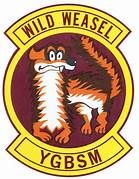
As a final note, I enjoyed the source material for this project. As an aircraft maintenance professional and pilot, this fulfilled my aviation ‘tism as well as learning more about how air defenses work. Reading about the aviators and technicians who did this all had amazing stories. My favorite quote from all of this came from Captain Jack Donovan when he said, “I’m gonna fly with you, and we’re gonna shoot a SAM site before he shoots us? You gotta be shittin’ me!!”[13] This statement would find its way onto their squadron patch and remains there today. If you made it this far, thank you for reading. I hope you enjoyed it!
Bibliography
Broughton, Jack. Thud Ridge. New York: J.B. Lippincott Company, 1969.
Broughton, Jack. Going Downtown: The War Against Hanoi and Washington. New York: Orion Books, 1988.
“Electronic Aspects of the Soviet Air Defense System.” Archive.org. Accessed December 20, 2024. https://archive.org/details/soviet-air-defense-system-technical-documents
Hampton, Dan. The Hunter Killers: The Extraordinary Story of the First Wild Weasels, the Band of Maverick Aviators Who Flew the Most Dangerous Missions of the Vietnam War. New York: William Morrow, 2015.
Hewitt, William A. Planting the Seeds of SEAD: The Wild Weasel in Vietnam. School of Advanced Airpower Studies, Air University.
“How Surface-to-Air Missiles Redefined Air Warfare in Vietnam.” SOFREP.
Joint Chiefs of Staff. Joint Suppression of Enemy Air Defenses (J-SEAD). Joint Publication 3-01.4, July 25, 1995.
Technical Order 1F-4C-1. Flight Manual F-4C, F-4D, & F-4E. McDonnell Douglas. 1970.
“Overview of SON-9 Fire Can Ground Radars” Archive.org. https://archive.org/details/cia-soviet-documents-collection
“P-30 Saturn Big Bar” Archive.org. https://archive.org/details/cia-soviet-documents-collection
Rasimus, Ed. When Thunder Rolled: An F-105 Pilot over North Vietnam. Washington, D.C.: Smithsonian Books, 2003.
Rasimus, Ed. Palace Cobra: A Fighter Pilot in the Vietnam Air War. New York: St. Martin’s Press, 2006.
“Soviet Air Defense Aviation: View of Training and Operations.” CIA Reading Room. https://www.cia.gov/readingroom/docs/DOC_0000969825.pdf
U.S. Air Force. Technical Order 1F-100D-1 Flight Manual for the F-100D and F-100F. Fairchild Republic Corporation. 1970.
U.S. Air Force. Technical Order 1F-105D-1 Flight Manual for the F-105D, F-105F, and F-105G. Fairchild Republic Corporation. 1978.
“The Air War Over Vietnam.” Air & Space Forces Magazine. https://www.airandspaceforces.com/
Parsch, Andreas. “MGM-45 Redeye.” Directory of U.S. Military Rockets and Missiles. https://www.designation-systems.net/dusrm/m-45.html
Paul, Michael J. Location, Suppression, and Destruction of Enemy Air Defenses: Linking Missions to Realize Advanced Capabilities. RAND Corporation, 2020.
Schuster, Carl O. “The Evolution of Air Defense Suppression During the Vietnam War.” History Net.
Young, James L., Jr. The Nadir of SEAD: United States Air Force Defense Suppression Doctrine, 1968–1972. Master’s thesis, Kansas State University, 2008.
War on the Rocks. “The Need for SEAD Part I: The Nature of SEAD.” War on the Rocks, May 2016.
Notes
[1] Dan Hampton, The Hunter Killers (New York: William Morrow, 2015), Kindle loc. 5113. [2] Hampton, The Hunter Killers, Kindle loc. 5114. [3] U.S. Air Force, Technical Order 1F-100D-1 Flight Manual for the F-100D and F-100F, 1970. [4] U.S. Air Force, Technical Order 1F-105D-1 Flight Manual for the F-105D, F-105F, and F-105G, 1978. [5] Technical Order 1F-4C-1, Flight Manual F-4C, F-4D, & F-4E, McDonnell Douglas, 1970. [6] Naval Air Systems Command, NATOPS A-4E/F/G Flight Manual, U.S. Navy, 1964. [7] Naval Air Systems Command, A-6 NATOPS Flight Manual, U.S. Navy, 1970. [8] Ibid. [9] Andreas Parsch, “MGM-45 Redeye,” Directory of U.S. Military Rockets and Missiles. [10] Hampton, The Hunter Killers, Kindle loc. 2379. [11] James L. Young, Jr., The Nadir of SEAD: United States Air Force Defense Suppression Doctrine, 1968–1972, 2008. [12] “The Air War Over Vietnam,” Air & Space Forces Magazine. [13] Hampton, The Hunter Killers, loc. 1184.
Originally published at the live site .