The Art of Leadership: Lessons Beyond Warfare
Sun Tzu's principles applied to business, sports, and personal development — with a few hard-won lessons from the hangar floor and the youth-football sideline.
By The Captain
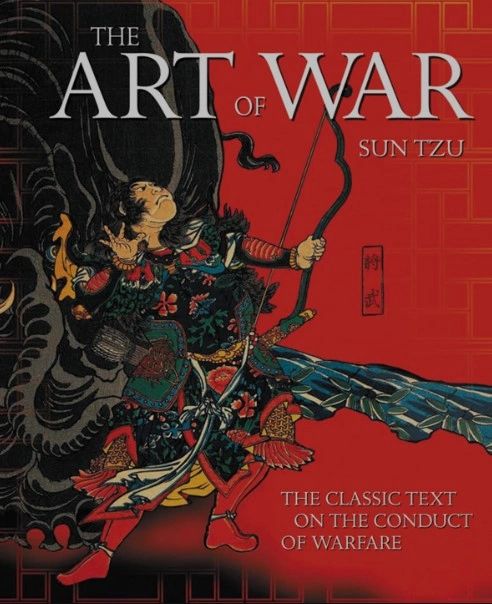
Welcome back to The Captain’s War Chronicles. One of the oldest texts on war is from the 5th century BC. The Art of War by Sun Tzu is one of the premiere texts on war. Sun Tzu’s treatise also teaches lessons beyond warfare. Here are the Captain’s thoughts on the subject.
Sun Tzu’s The Art of War is probably one of the most famous treatises on military strategy in the world. Though The Art of War is a military strategy manual, its principles can be broadly applied to other arenas such as business, sports, and even personal development — proving valuable for both men and women by teaching lessons in strategy, adaptability, preparation, and psychological insight. Personally, I have used it in business and when I coached youth football. Thousands of books, videos, and articles have been written on its use in sports, business, and even personal development. As you can see, The Art of War has many uses. From business to self-development, The Art of War may hold your answers. What guidance can the enlightened Sun Tzu give us?
Subdue the Enemy Without Fighting
Though there are endless examples of The Art of War’s usefulness in a broader sense than just militaristic endeavors, we will take three for the brevity of this paper. First, let us look at Sun Tzu’s statement, “Generally in war, the best policy is to take a state intact; to ruin it is inferior to this. For, to win one hundred victories in one hundred battles is not the acme of skill. To subdue the enemy without fighting is the acme of skill.”[1] In business, price wars are antithetical to this concept. The airlines’ price wars create an environment of poor service and money-losing operations. In my own experience, when I had my aviation maintenance business, I could not survive as a low-cost operator against other shops in the area. Instead, I gathered opinions from customers across the region and focused on quality work in a reasonable time. Though I was the most expensive dollar-wise in the area, my customers were willing to pay due to the fact I would get their airplane’s maintenance done in a third of the time of my competitors and they knew it would be right the first time. This way, I beat out my competitors without engaging in a war with them. Within the year I cornered my market area without a significant ad spend, as it was through word of mouth.
In sports, many of the great coaches have studied The Art of War in developing their style and strategy. Bill Belichick, while speaking with Rich Eisen from the NFL Network, said: “You can go all the way back to a few hundred years B.C., Sun Tzu, ‘The Art of War.’ Attack weaknesses, utilize strengths and figure out what the strengths are on your team. There are some things you have to protect. Find the weaknesses of your opponent, and attack.”[2] He said this when explaining his success with the New England Patriots during the Belichick-Brady era. Personally, when I coached youth football when my sons were playing, I also used the other team’s weakness against them. Our league went by age instead of weight. My team of 10–12-year-olds were the smallest and least experienced on the field. This weakness, I turned into a strength through team building and conditioning. This combined with the double wing formation created strength where there wasn’t any, as the formation combined with the tight team we built could withstand the other team’s defense, and the defensive formation we used put continual pressure on their offense to where it wore them down. The conditioning I put them through also gave them the resilience to outlast the other teams and become a powerful second-half team. Through this use of Sun Tzu’s concept, I took a team that to that point never won a game to beat the toughest teams in our league.
Use Speed to Overcome Competition
The final example I would like to use is Sun Tzu’s concept of “use speed to overcome competition.”[3] This is very true in business. In fact, this concept may be the most important in the 21st century as the speed of technology drives ever faster change in markets. Agile business practices and lean process improvement are so very important in a successful business. In the large corporate environment, the ingrained bureaucracy and waste in process make it hard to adapt to marketplace changes. This is where a small business can really find its place to win. Smaller organizations, if they have a great team with their fingers on the pulse of their industry, and they operate in a lean and mean way, can rapidly pivot to capitalize on new technologies that beat their competition. On a personal development level, an individual needs to stay abreast of new technology in either their career or even for their personal life. Many new technologies have a learning curve, and if you are first over the curve you will position yourself ahead of your peers and be dominant in your profession or more efficient in your personal life, creating more space for enjoyable endeavors.
Leadership by Example
There are two books that I keep on my shelf at work that have multiple post-it notes and highlights. One is The Art of War, and the other is Leadership Strategy and Tactics by Jocko Willink. Both books emphasize the concept of “leadership by example.” This goes back to the many examples so far in this course of the greats leading by example. Jocko states in his book, “As a leader, the most important actions you can take are to lead by example.”[4] Chesty Puller exemplified this through his career. He demanded that his officers always eat last after their men and exemplified this by being at the back of the chow line himself. I have personally done this when in a management or leadership role by taking out the trash and mopping the hangar floors to show that I am not above such tasks and set the example of my expectations.
Both books lent well to many leadership problems I have faced in my career. One of my most daunting leadership tasks was during my time as a Lean Consultant for Embraer. I continually had to refer to those books for ideas to help drive the change while getting buy-in from the team. It was very hard for several reasons. The two most challenging were that the company is composed of Brazilians and Americans with different sets of values and personality traits, and the other is that the same trait shared across the board is the stubbornness and unwillingness to change of the Aircraft Maintenance Technician. This is where both Jocko and Sun Tzu helped me out. Both stressed explaining the why to the team. By doing this, most got on board with the change, and when the others saw the result, most of the rest came on to the program. Unfortunately, there was one individual who absolutely refused to play the game and, as he was also in a leadership role, worked against me and created problems. In this regard, it was my only failure in successfully using my leadership skills to full effect, but on further reflection afterward, I did learn lessons which I continually use to this day.
Sun Tzu for Everyone
The Art of War is not a gender-specific text. Men, women, and all the other pronoun groups can glean lessons from this great text. Throughout history, many great women have used Sun Tzu’s concepts to reach their pinnacles of success. There are two authors that expound on these concepts in their works about how women can be empowered by The Art of War. In her work Sun Tzu for Women, Becky Sheetz Runkle says, “Winning requires careful preparation and the opportune launch of unexpected strategies and tactics.”[5] This can be very beneficial for women in the workplace, especially in men-dominated spaces such as the hangar floor. Some of the best women mechanics that I have personally worked with utilize this approach and spend their free time and any down time learning their trade. Some of my best students were women, as they worked hard to prove they belonged in their chosen profession and were a joy to teach.
The Art of War and the Art of Command
Finally, there are many similarities to The Art of War and The Art of Command. They both emphasize the art and study of strategy and the importance of leadership. Lessons on assessing a situation and making informed decisions are key to adapting to the fluid reality of combat. Both texts also teach the importance of psychological understanding of both their own forces as well as those of their opponent. A leader must understand those that he or she leads as much as they need to understand themselves. By knowing his or her own weakness, this positions them better to exploit that of their opponent.
Both texts also stress the need of a leader to be both flexible and adaptive to their environment and tactical situation. Of course, as both texts point out, you cannot adapt well to the situation if you do not properly prepare and have some forethought of how a situation may unfold. As Eisenhower is quoted, “Plans are worthless, but planning is everything!”[6] This embodies the importance of being prepared for any fight or situation. With a proper plan also comes the need to train hard for executing that plan with all possible scenarios worked in. This will prepare the team to excel on the battlefield and beat their opponent.
A third example for the similarities is the use of deception. Both texts advocate the use of tactics to mislead an opponent to be able to exploit an opportunity before they know you did. Of course, a leader must be transparent to the team, but deception is a key strategy when dealing with an opponent.
Closing
As we have seen, since its writing around the fifth century BC, Sun Tzu’s The Art of War has been one of the most powerful influences on military strategy and thought. Elements of it can be seen in Clausewitz’s own book The Art of War and has been touted as a common reference of leaders such as Colin Powell, who is reported to have several different translations of the text on his shelf.[7] The Art of War is also a useful text outside the military and is widely used in business, leadership, sports, and even personal development. At the end of the day, The Art of War is arguably one of the most useful texts ever written.
Further Reading
Business: The Art of Business Wars: Battle-Tested Lessons for Entrepreneurs from History’s Greatest Conflicts.
Sports: Way of the Champion: Lessons from Sun Tzu’s The Art of War and Other Tao Wisdom for Sports & Life.
Personal Development: Sun Tzu for Success: How to Use The Art of War to Master Challenges and Accomplish the Important Goals in Your Life.
Bibliography
Derousseau, Jerry Lynch. Way of the Champion: Lessons from the Art of War and other Tao Wisdom for Sports and Life. Clarendon: Tuttle Publishing, 2006.
Michaelson, Gerald A., and Steven W. Michaelson. Sun Tzu for Success: How to Use The Art of War to Master Challenges and Accomplish the Important Goals in Your Life. Adams Media, 2003.
Willink, Jocko. Leadership Strategy and Tactics: Field Manual. New York: St. Martin’s Press, 2020.
Ryan, Jason L. The Art of Business Wars: Battle-Tested Lessons for Entrepreneurs from History’s Greatest Conflicts. New York: HarperCollins Publishing, 2021.
Lauletta, Tyler. “Bill Belichick Says ‘The Art of War’ Helped Him Build the Patriots Dynasty.” Business Insider, December 15, 2019.
Worrall, Pamela. “Sun Tzu’s The Art of War — What’s In It For Women?” The Glass Hammer, February 10, 2011.
Originally published at the live site .